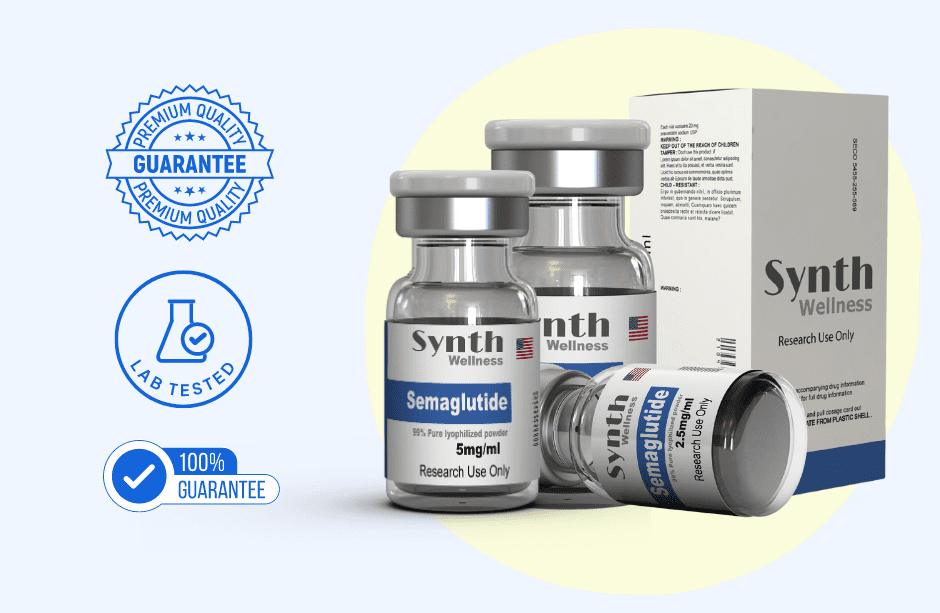
In the world of pharmaceuticals, research, and therapeutic development, peptides have emerged as powerful tools with diverse applications. However, their inherent fragility often presents a significant challenge: maintaining stability. The choice between lyophilized (freeze-dried) and liquid forms of peptides is a critical decision that directly impacts their integrity, efficacy, and shelf life. Understanding the nuances of each form is paramount for researchers, clinicians, and consumers alike.
Why Peptide Stability Matters
Peptides are chains of amino acids, smaller than proteins, but equally susceptible to degradation. Their biological activity is highly dependent on their specific three-dimensional structure. Any alteration to this structure—due to chemical reactions, physical stresses, or environmental factors—can lead to a loss of function, reduced potency, or even the formation of potentially harmful byproducts. Ensuring stability means:
- Preserving biological activity and potency.
- Extending shelf life, reducing waste, and enabling long-term storage.
- Guaranteeing consistent and reliable results in research and clinical settings.
- Ensuring patient safety and therapeutic efficacy.
The Challenges of Peptide Instability
Peptides can degrade through various pathways, including hydrolysis, oxidation, deamidation, aggregation, and racemization. These processes are accelerated by factors like high temperature, extreme pH, light exposure, and the presence of impurities or enzymatic activity. Liquid formulations, by their very nature, provide an environment where these reactions can occur more readily.
Lyophilized Peptides: The Gold Standard for Stability
Lyophilization, or freeze-drying, is a dehydration process used to preserve a variety of perishable materials, including pharmaceuticals. For peptides, it involves freezing the peptide solution and then reducing the surrounding pressure to allow the frozen water to sublimate directly from the solid phase to the gas phase. This process removes water, which is a primary solvent for degradation reactions, leaving behind a stable, dry powder or cake.
- Extended Shelf Life: By removing water, lyophilized peptides significantly slow down degradation kinetics, allowing for storage over months or even years at appropriate temperatures (often refrigerated or even room temperature for some stable peptides).
- Reduced Degradation: The absence of water dramatically minimizes hydrolysis, oxidation, and microbial growth, preserving the peptide’s structural integrity.
- Enhanced Purity: Lyophilization can help maintain the purity profile of the peptide over time, as fewer degradation products are formed.
- Convenience in Transport: Dry powders are lighter, less prone to spills, and less sensitive to temperature fluctuations during shipping compared to liquid formulations.
Reconstitution: A Critical Step
While highly stable in their dry state, lyophilized peptides require reconstitution with a suitable solvent (e.g., sterile water, bacteriostatic water, saline, or specific buffers) before use. This step is crucial and must be performed correctly to avoid damaging the peptide. Improper reconstitution can lead to aggregation, denaturation, or loss of activity. Once reconstituted, the peptide reverts to a liquid state and its stability profile becomes similar to that of a liquid formulation, generally requiring refrigeration and having a significantly shorter usable life.
Liquid Peptides: Convenience with Caveats
Liquid peptide formulations are prepared by dissolving the peptide in a solvent, often with excipients to aid solubility and stability. They offer immediate convenience as they are ready to use, eliminating the need for reconstitution. This “ready-to-administer” format is appealing for certain applications, especially where rapid preparation is critical.
- Shorter Shelf Life: The presence of water and other solvents provides an environment conducive to chemical and physical degradation. Liquid peptides typically have a much shorter shelf life, often measured in days or weeks, even under refrigeration.
- Increased Degradation Risk: They are more susceptible to hydrolysis, oxidation, and aggregation, particularly if not stored under optimal conditions (e.g., proper temperature, light protection).
- Formulation Complexity: Stabilizing peptides in liquid form often requires complex formulation strategies, including the use of buffers, antioxidants, chelating agents, and cryoprotectants, which can add to the cost and complexity.
- Temperature Sensitivity: Liquid peptides are generally more sensitive to temperature fluctuations, increasing the risk of degradation during transport and storage.
Factors Influencing Peptide Stability (General)
Regardless of whether a peptide is lyophilized or liquid, several common factors universally impact its stability:
- Temperature: Higher temperatures accelerate most degradation reactions. Refrigeration (2-8°C) or freezing (-20°C or colder) is often required.
- pH: Peptides have optimal pH ranges where they are most stable. Deviations can lead to hydrolysis or aggregation.
- Light Exposure: UV and visible light can induce photochemical degradation, leading to oxidation or structural changes. Dark storage is often recommended.
- Oxygen Exposure: Oxygen can cause oxidative degradation, especially for peptides containing susceptible amino acids like methionine, tryptophan, and cysteine.
- Container Material: The material of the storage vial (e.g., glass vs. plastic) and its surface properties can interact with peptides, leading to adsorption or leaching of impurities.
- Purity: Impurities from synthesis or excipients can catalyze degradation reactions.
Choosing the Right Format for Your Needs
The decision between lyophilized and liquid peptides hinges on the specific application, desired shelf life, and logistical considerations:
- For Long-Term Storage & Research: Lyophilized peptides are almost always preferred due to their superior long-term stability and preservation of integrity.
- For Immediate Clinical Use & Convenience: Liquid formulations can be advantageous if a ready-to-use product is essential, provided its short-term stability is sufficient for the intended period of use and proper storage is maintained.
- Cost & Manufacturing: Lyophilization can be a more expensive and time-consuming process initially, but it can offset costs by extending shelf life and reducing waste over time.
Conclusion
While liquid peptide formulations offer convenience, their inherent instability makes lyophilized peptides the preferred choice for preserving the integrity, potency, and shelf life of these valuable biomolecules. The freeze-drying process effectively mitigates the primary drivers of degradation, offering a robust solution for long-term storage and ensuring reliable performance. However, proper reconstitution and careful handling post-reconstitution remain critical. Understanding the strengths and weaknesses of each form empowers users to make informed decisions, ultimately optimizing the utility and efficacy of peptides in various fields.